
Bukavu, Sud-Kivu — La SPAFECO franchit officiellement le cap des soixante-dix hectares reboisés dans le territoire de Walungu. Étalée sur plusieurs campagnes successives, cette opération de plantation à grande échelle constitue à ce jour la plus importante contribution de l'association à la lutte contre la déforestation au Sud-Kivu.
Le projet, mené avec le soutien actif des communautés paysannes locales, mise sur des essences agroforestières capables de restaurer la fertilité des sols tout en produisant fruits, ombrage et biomasse. C'est cette double vocation — écologique et économique — qui explique l'adhésion massive des villageois.
Une réponse directe à l'appel de la planète
Face à la déforestation accélérée et aux dérèglements climatiques observés dans la région, la SPAFECO a fait du reboisement son cheval de bataille. Le coordonnateur national, Me Namuto Christian, le rappelle régulièrement : « le sol ne nous appartient pas, il nous est prêté par toutes les générations futures. Nous devons le gérer durablement. »
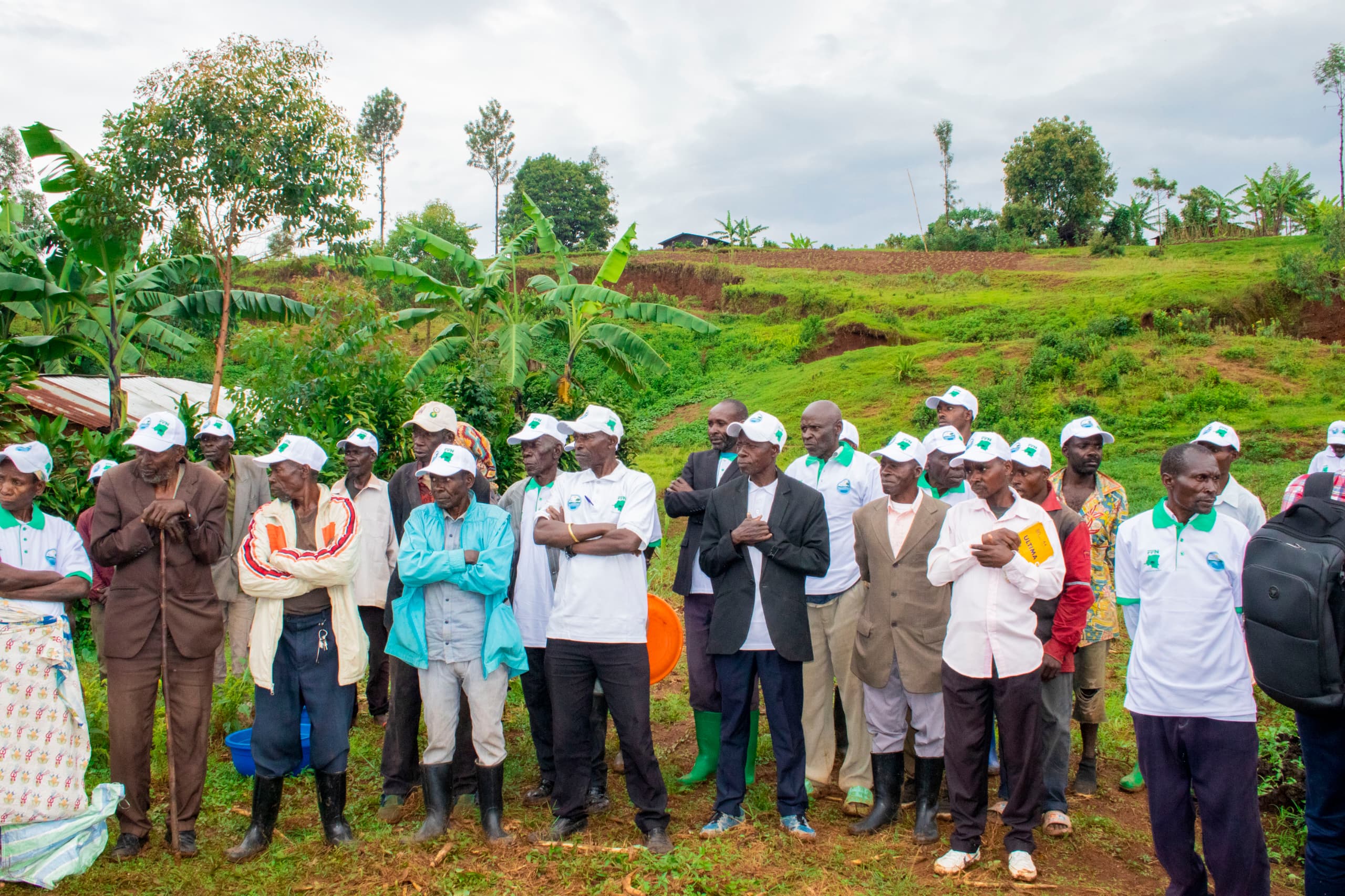 Distribution d'arbres agroforestiers aux familles paysannes de Walungu.
Un travail collectif
Au-delà du nombre d'arbres, ce qui distingue cette campagne, c'est sa méthode. La SPAFECO ne plante pas pour les communautés mais avec elles : sélection des sites avec les chefs coutumiers, formation des planteurs, suivi technique par des ingénieurs agronomes, et engagement des bénéficiaires sur l'entretien des plants pendant les premiers mois.
- Plus de 70 hectares plantés au total
- Essences agroforestières adaptées au sol et au climat de Walungu
- Implication directe des paysans dans toutes les phases du projet
- Accompagnement par des ingénieurs agronomes pour pérenniser les plantations
Et après ?
Cette étape n'est pas une fin en soi. Elle marque l'amorce d'un déploiement plus large prévu dans plusieurs autres territoires du Sud-Kivu, dont Kabare où un projet de plus de 50 000 arbres est déjà en exécution. La SPAFECO appelle ses partenaires — personnes physiques comme personnes morales — à soutenir financièrement cette dynamique pour que la planète puisse reprendre son souffle.
La planète crie au secours et tend la main à tous les êtres humains sans distinction de race, de religion, de pays, de sexe.
Bukavu, South Kivu — SPAFECO has officially crossed the seventy-hectare mark of reforested land in Walungu territory. Spread across several successive campaigns, this large-scale planting operation is to date the association's most significant contribution to the fight against deforestation in South Kivu.
Carried out with the active support of local farming communities, the project relies on agroforestry species capable of restoring soil fertility while producing fruit, shade and biomass. It is this dual ecological and economic vocation that explains the broad uptake among villagers.
A direct response to the planet's call
Faced with accelerated deforestation and climate disruption observed in the region, SPAFECO has made reforestation its flagship effort. The National Coordinator, Me Namuto Christian, often reminds us: "the land does not belong to us — it is loaned to us by every future generation. We must manage it sustainably."
Distribution of agroforestry trees to farming families in Walungu.
A collective effort
Beyond the number of trees, what sets this campaign apart is its method. SPAFECO does not plant for communities but with them: site selection with customary chiefs, training of planters, technical supervision by agronomists, and a commitment from beneficiaries to tend the seedlings during their critical early months.
- Over 70 hectares planted in total
- Agroforestry species suited to Walungu's soil and climate
- Direct involvement of farmers in every phase of the project
- Support from agronomists to ensure plantations last
What's next?
This milestone is not an endpoint. It opens the way to a broader rollout planned across several other South Kivu territories, including Kabare where a project of more than 50,000 trees is already underway. SPAFECO calls on its partners — individuals and organizations alike — to financially back this momentum so the planet can begin to breathe again.
The planet is calling for help and reaches out to every human being, regardless of race, religion, country or gender.